This is the first non-camouflaged image of the 600-plus-hp Corvette Z06, which will use a 5.5-liter V-8 and be revealed on October 26.
from Latest Content - Car and Driver https://ift.tt/3m1MzQe
via IFTTT
This is the first non-camouflaged image of the 600-plus-hp Corvette Z06, which will use a 5.5-liter V-8 and be revealed on October 26.

In a market of flashy and ferocious performance cars, AMG's two-door E53 is subtle yet effective.
When the company pulled its V-8 models off the menu, it mentioned compliance and supply-chain issues. Now, AMG boss Philipp Schiemer says it was a quality issue.
Electric vehicles are getting the lion’s share of the zero-emissions attention, but hydrogen has long been lurking along the sidelines. Toyota, Hyundai, General Motors, Honda, and more have all been pushing the use of the gas to produce electricity; allowing zero-emissions driving with no waiting for recharging. Though the technology has been around for decades, it’s still new to most, and still confusing. Here’s everything you need to know about hydrogen for power, as well as the fuel-cell electric vehicle.
We’ll start with how fuel cells work, or at least the simplified version of it. The fuel cell stack is where the magic happens, and the conversion of hydrogen into electricity (and water) largely is magic. Hydrogen gas is pumped into the anode of each fuel cell (it will have hundreds of these cells in each system, referred to as a fuel cell stack). The hydrogen reacts with a catalyst and releases its protons and electrons. The protons pass through a porous membrane while the electrons run through a circuit and create an electric current. At the cathode, the protons and electrons combine with oxygen from the air to produce water. It’s silent, efficient and leaves only electricity, water vapour and some heat as waste.
Still more than you wanted to know? That’s fine, how it works isn’t important. Basically, you pump in hydrogen gas and you get electricity and water vapour on the other side. Enough electricity to power a car.
Because that power can’t go straight to the motor (usually), a small EV battery is fitted to store and buffer the electricity. Hydrogen gas is stored in tanks. Toyota’s Mirai, one of the few fuel cell vehicles (FCEV) vehicles on sale now, has two storage tanks that weigh almost 90 kilograms. The tanks store the gas at 10,000 psi, and hold about five kilograms of hydrogen.
Five kilograms doesn’t sound like much. It’s about the same weight as five litres of gasoline, but the gas is compressed. The tanks hold 122 litres of hydrogen gas; enough to give the sedan an estimated 502 kilometres of range. Like an EV, thanks to its small batteries, a FCEV can also recapture energy from coasting and braking, helping to add range and efficiency.
Even more importantly, filling up a hydrogen fuel cell vehicle’s tank happens in just a few minutes and at a normal-looking pump. While the station needs to have a supply of hydrogen in a pressurised tank, they aren’t required to build and install large amounts of electrical infrastructure to support multiple vehicles charging at Level 3 rates, which also means there is no taxing of local electrical grids. Even if hydrogen gas is produced on-site, the electric load is balanced throughout the day, not used in short high-draw bursts.
Hydrogen, at least for current needs, is made using natural gas reforming. It is a process where natural gas and high-temperature steam are combined. The result is hydrogen, carbon monoxide, and carbon dioxide. Most of the CO can be turned into more hydrogen, but CO2 is still an end product. Still, the U.S. Department of Energy says this cuts greenhouse gas emissions 90 per cent compared with gasoline.
We can also make hydrogen using electrolysis: adding electricity to water, with a process in the middle that splits the water into hydrogen and oxygen. With green energy, like hydroelectric, solar, or wind, this can produce hydrogen gas with zero emissions, making FCEVs emissions-free. Both methods are still expensive, though efforts are underway to reduce the costs to $2 per kilogram and eventually $1 per kilogram. Today’s costs are closer to $20 per kilogram, though some of the on-sale vehicles include the cost of fuel, essentially making it free for the person who is driving the car.
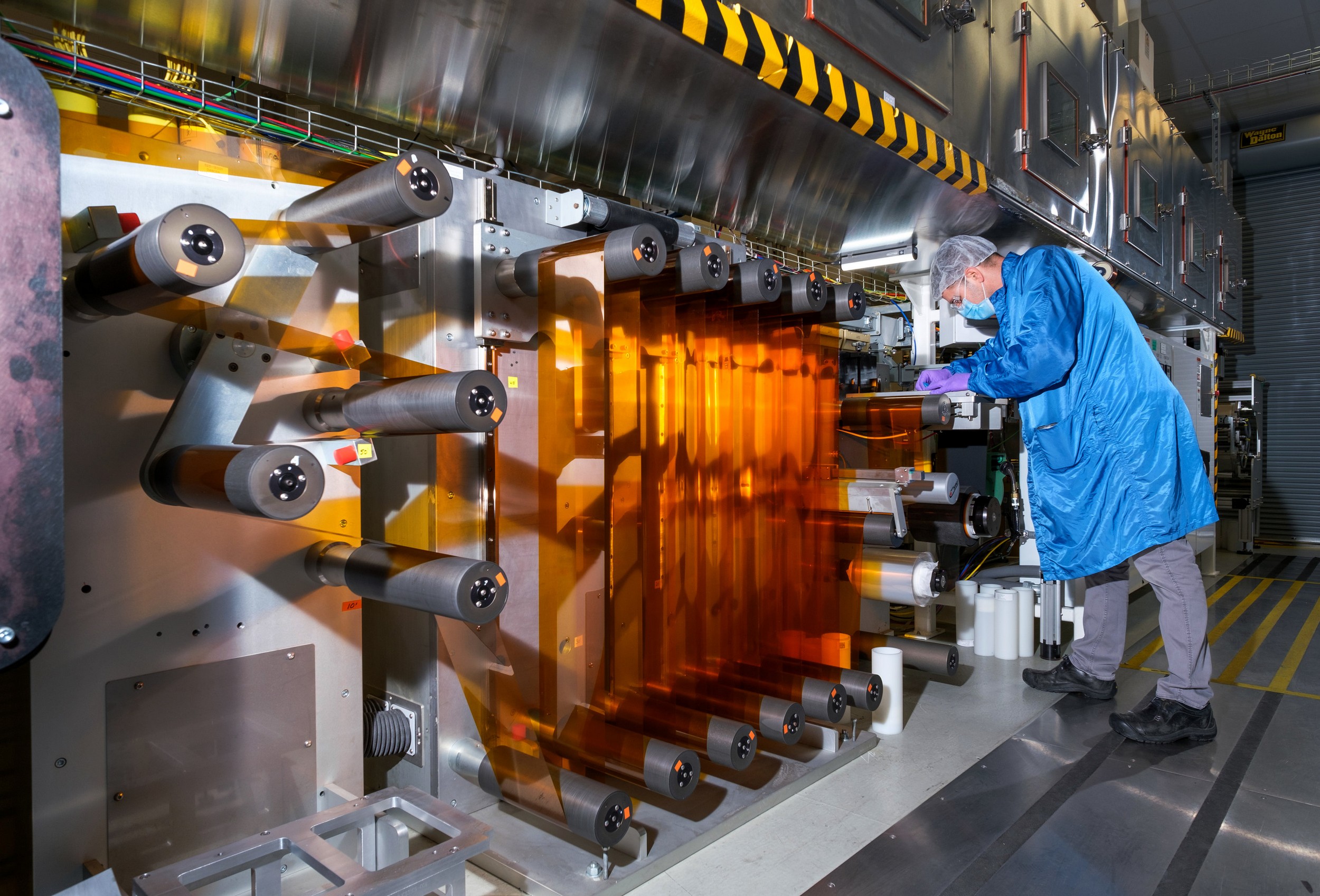
General Motors Fuel Cell Controls and Process Engineer Joe Truchan operates a coating machine in the fuel cell laboratory at the GM Global Propulsion Systems Pontiac Engineering Center in Pontiac, Michigan. (Photo by Steve Fecht for General Motors)
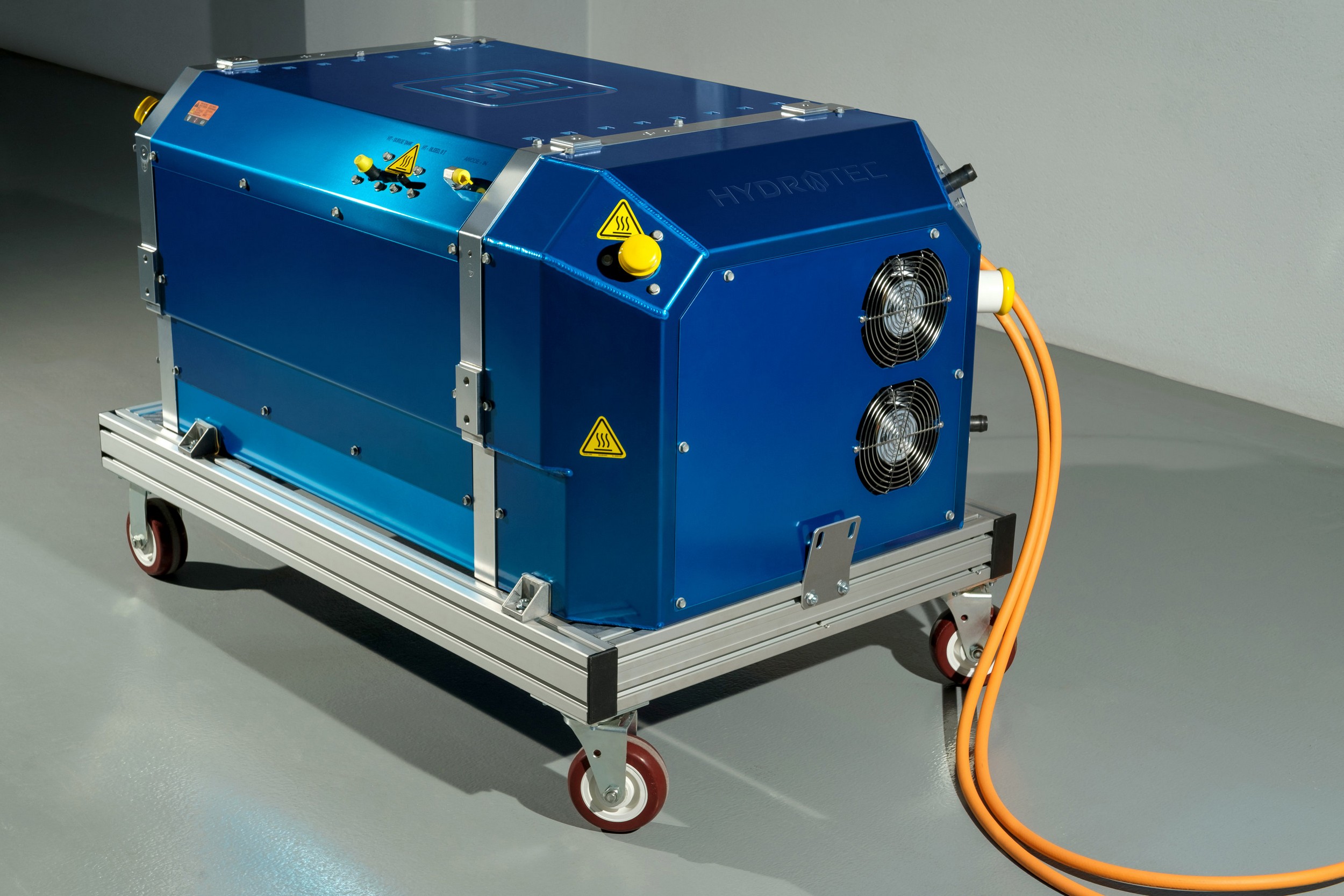
General Motors’ Hydrotec fuel cell power cubes contain more than 300 fuel cells along with thermal and power management systems. (Photo by Steve Fecht for General Motors)
In Canada, there are currently five hydrogen filling stations. One in Quebec City, one in Victoria, and three in Vancouver, meaning that if you want to make a coast to coast trip, you’re out of luck.
Work is underway, though, to add more hydrogen refuelling infrastructure. More B.C. locations are planned by the Hydrogen Technology & Energy Corporation. HTEC is also planning six more stations in Quebec, which has both a large quantity of affordable green power and a government encouraging zero-emissions vehicles and transportation solutions.
Toyota currently offers the Mirai fuel cell sedan in the U.S. and Canada. In Canada, the second-generation sedan is set to be sold exclusively in B.C. and Quebec, though it appears that sales launch has been delayed. The first-generation vehicle saw more than 50 sold in Canada. Honda offered the Clarity FCEV in one U.S. state, but the model did not go on sale in Canada. Hyundai does offer the NEXO fuel cell crossover in Canada. The brand just recently added the 2021 version to its website, with pricing from $73,000, offering a five-minute refuel time and 570-kilometre range.
If you want to experience a hydrogen car, you’ll need to live in or around Vancouver. Earlier this year, Lyft and Toyota — through its Kinto Share service — made a number of Mirai FCEVs available to rent to drivers who use the Lyft platform there. Meaning they can rent them (for as little as $198/week), and you may be able to hire one for a ride.

The Chevrolet Colorado ZH2 fuel cell electric truck loves the mud and its 37” tires and extreme approach and departure angles show its capability on the Heavy Vehicle Test Area at General Motors’ Milford Proving Ground. The hydrogen-powered fuel cell in the ZH2 runs nearly silent, can export up to 25 kW of electric power and generate up to two gallons of useable water per hour from its only emission, which is water vapor.
Long-distance trucking may be the ideal place for hydrogen fuel cells. While electric big rigs like the planned Tesla Semi offer ranges longer than any car, they also require massive charging infrastructure, hours to charge, and, more importantly, several tonnes of batteries. A big rig running on zero-emissions hydrogen could fill up in minutes and travel coast to coast in the same amount of time as a diesel truck. It would also be able to haul similar payloads since the truck’s FCEV driveline would not require a large battery capacity, which cuts into allowable weight.
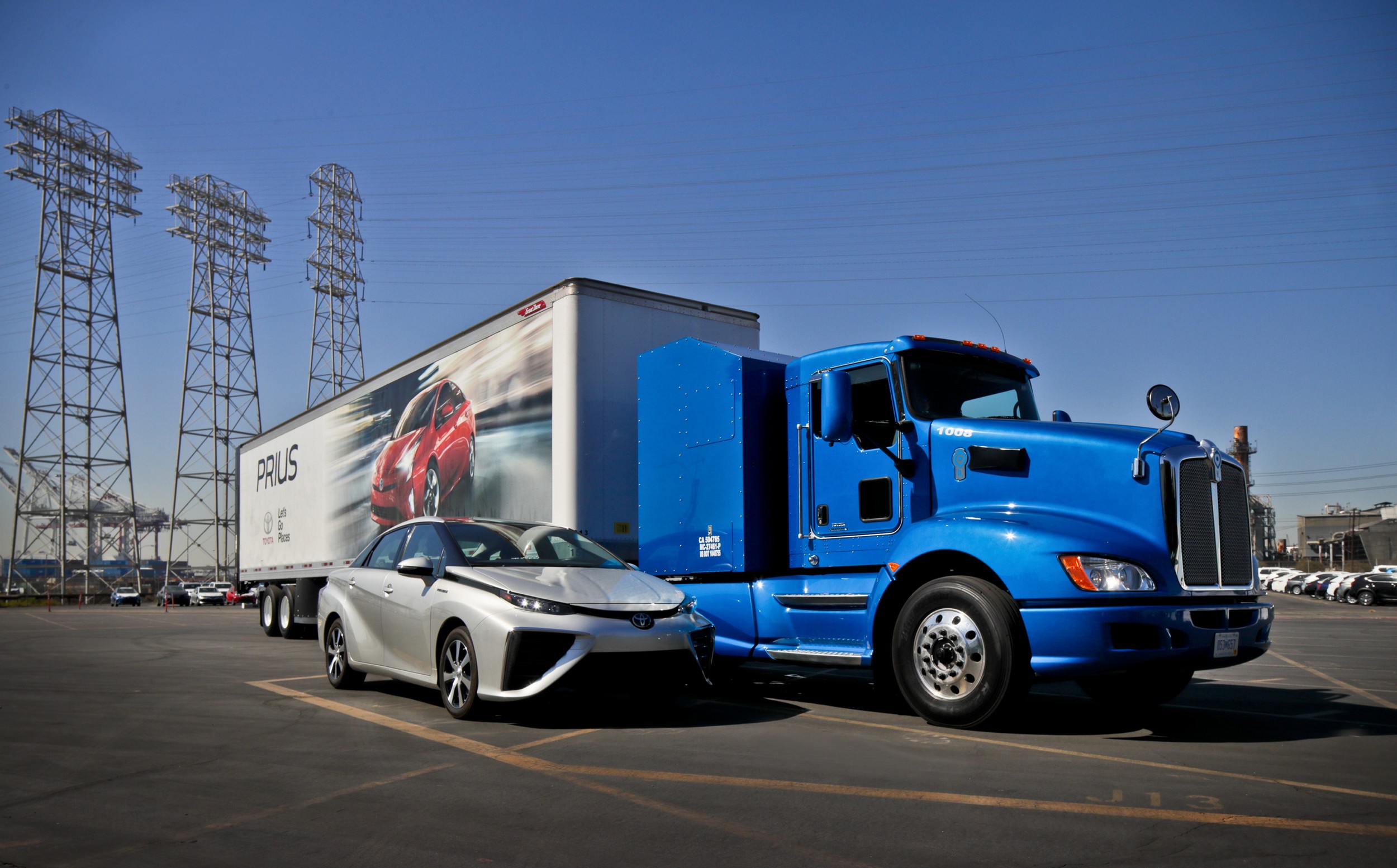
Toyota is currently testing FCEV trucks around the Port of Long Beach, in Calif. Automotive companies Kenworth, Daimler, Cummins, and General Motors are all currently either in development of cells or are testing them on the road.
For now, the challenges are similar to those faced by EVs. The tech is expensive, and the infrastructure doesn’t exist. Unlike EVs, though, once those two challenges are met, there are less ongoing issues with mining for materials like lithium and cobalt. Fuel cells also solve the issues faced by major transportation firms — including range and filling time — making them practical for trucks, trains, and ships.
While hydrogen fuel cells haven’t had the glitz and glamour of the EV, the technology has been in research for nearly as long, showing impressive results. With just a few hurdles to cross, it could be ready for the highway sooner than you might expect.
The post Hydrogen Fuel Cell Vehicles: Everything you Need to H2-Know appeared first on WHEELS.ca.
His father, Ron Fellows, is a champion Canadian racing driver who got a lot of ink.
His brother, Patrick Fellows, is a talented Canadian hockey player who spent his major Junior career passing the puck to Connor McDavid and got a lot of ink.
Now it’s Sam Fellows’ turn. No. 1 son – he’s 27 — is following in his father’s footsteps and before he’s finished he’ll get a lot of ink too. This column is just the beginning.
While Sam took some time to get going, he’s racing this season in the NASCAR Pinty’s Series, whose winner becomes the year’s Canadian national driving champion. He’s got a way to go, though, because his legendary car owner, Jim Bray of Brantford, was late landing sponsorship for Sam’s rookie year. As a result, the season finale tomorrow at Delaware Speedway outside London, Ont., will only be his fourth start in the series.
But that doesn’t mean he’s running right out of the box. He’s been dabbling in the sport since his early teens, when he and his dad went go-karting together. Over the years, he’s done some endurance racing in Ontario. More recently, Sam drove a sportscar in a Canadian Touring Car Championship double-header in which he won one race and finished second in the other.
And while he’d like to follow in his father’s footsteps and carve out a career in sportscar racing, he’s found that sportscars (not just in Canada, but all over the world) have gotten out of hand, in terms of the costs involved. Said Sam: “As a result, my ambition has shifted. Once I thought about racing for Corvette, like my dad, or racing at Le Mans – and I’d still like to take a crack at that – but right now, in Canada, the Pinty’s series is the best thing going.”
Some children grow up with their fathers eating breakfast and then going to work in a factory or an office. Sam and his brother grew up at racetracks, where their dad drove racing cars for a living. Whether it was Trans-Am, or World Challenge, or IMSA or NASCAR, Ron Fellows would collect his winnings and then do what men the world over have been doing forever: he’d give his cheque to his wife.
“My mother has always been the brains of the operation,” laughed Sam, who’s not married himself but lives with a girl and is “off the market.”
His first memory of his dad’s work came when he was about four years old and he was at a race, “and I couldn’t figure out how daddy won the race and yet he wasn’t in the car.” It turned out it was a sportscar race, so he had a co-driver. “It took awhile, but I figured out that in Trans-Am he was the only driver but in sportscars he had help.”
Sam loved his childhood. His dad’s teammates and their wives were almost like his aunts and uncles. He spent time with his dad’s sponsors and travelled all over to races, such as Le Mans in France. His interest in the sport was piqued when he snuck into the driver’s meeting before the races and started to learn about things like “aero” and “camber.”
Because his dad was able to race until he was in his fifties, and the family spent the summers on the road, Sam’s driving career was put on hold. Then, when he wanted to start, his parents insisted he attend Carleton University where he studied journalism (“I can write all my own press releases and do my own video”). He got back from Ottawa out of shape and it took time before he was ready to race. But he finally got the hammer down.
Sam calls the drivers in the Pinty’s series “world class,” and says that the top four or five drivers, given the proper equipment, could more than hold their own in the NASCAR Cup championship.
“And it’s going to get better (the Pinty’s series). So the more experience I can get there, the better. My parents gave me the greatest gift they could: my name. My name can open doors and if I do well in the Pinty’s series that might get me into a trucks race or even the Xfinity Series.”
But he has to focus on the present and his time in Canadian stock cars.
“If I look too much into the future,” he said, “I might be getting ahead of myself. But if I have a good race at Delaware tomorrow . . . “
“Meantime,” he said, “I don’t want people to think I’m the rich kid. Everybody thinks I’m rich because my dad owns a racetrack but that’s not the case. I’m not naïve, though; I know I’m here because Jim Bray told Mike Curb (Sam’s sponsor) that he had a driver named Fellows.
“I know there was once a pretty good race driver named Fellows. Ron Fellows. My goal now is to be the best ‘Sam Fellows’ out there.”
Norris McDonald, a past Wheels editor in chief, covers the Canadian automotive and global racing scene for the Star. He is a member of the Canadian Motorsport Hall of Fame. Email nmcdonald@thestar.ca or follow him on Twitter @NorrisMcDonald2.
The post Sam Fellows is making a name for himself appeared first on WHEELS.ca.
Used-car prices are high, which means now is a good time to sell, but some of us have trouble letting go of old friends.